By the Phnix Tech web design team, Auburn NSW · Last updated October 2026
When someone in Western Sydney has a toothache, a cracked filling or a nervous child who needs a check-up, they pick up their phone and search. Within seconds they decide which practice looks trustworthy, whether it is close enough and whether they can book without a phone call.
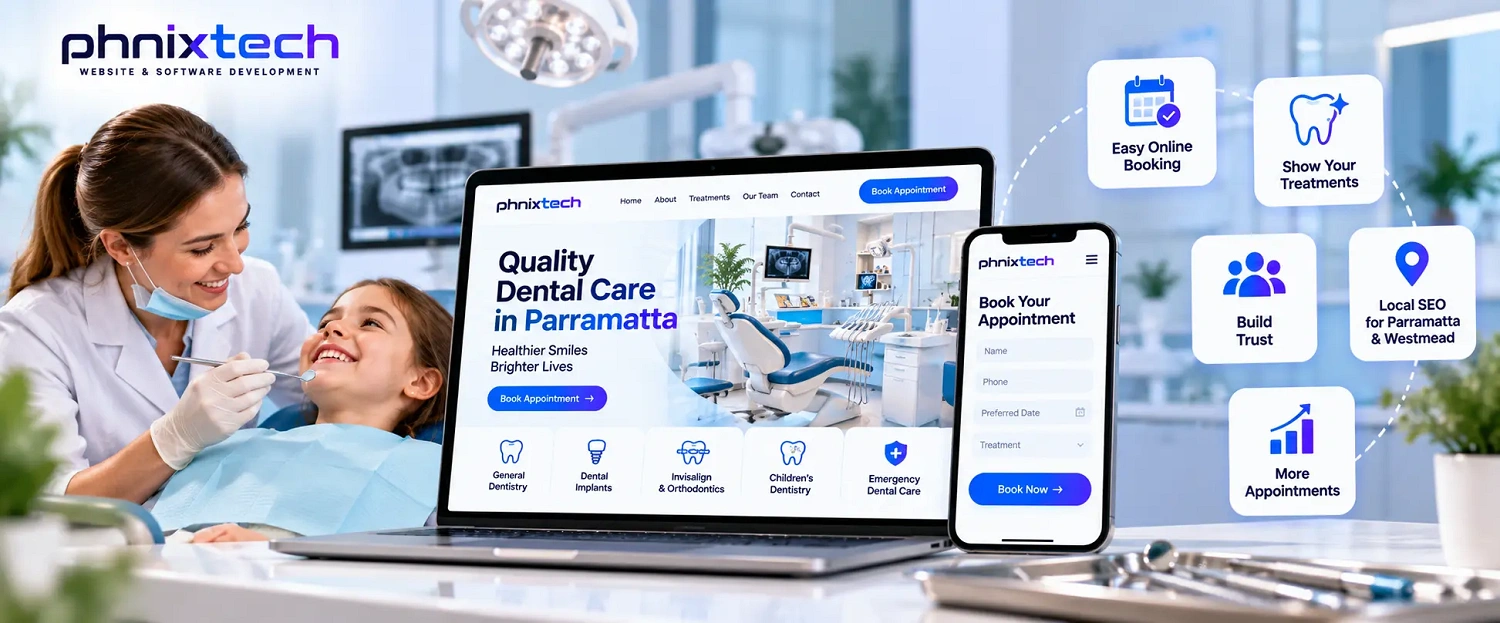
Web design for dentists in Parramatta is about winning that moment. A good dental website shows patients who you are, what you treat, where you are and how to book, and it does all of that inside the advertising rules that apply to registered health practitioners.
This guide explains what a dental or clinic website needs, how local SEO helps you appear for Parramatta and Westmead searches, how to stay on the right side of AHPRA advertising rules, what it costs and how to choose a web designer. It is written for dentists, practice managers and clinic owners across Parramatta, Westmead and Western Sydney.
Parramatta is one of Sydney's busiest centres, and Westmead is home to a large health precinct. Patients in this area have plenty of choice, and most of them compare practices online before they ring anyone.
That means your website does several jobs at once:
A website built years ago on a template, with a hidden phone number and one page called "Services", rarely does any of this well.

These are the features that matter most for dental and allied health practices.
Put a "Book appointment" button and your phone number in the header of every page, and keep them visible as visitors scroll on mobile. If you use online booking software, the booking flow should open from that button. If patients still prefer to call, make the number tappable.
A page for general check-ups and cleans, one for dental implants, one for Invisalign or orthodontics, one for children's dentistry and so on. Each page should explain the treatment in plain language, who it suits, what to expect and how to book. One page per treatment helps patients and helps Google understand what you offer.
Show each dentist or clinician with a photo, their role, their registration and qualifications, and a short, professional bio. Patients want to know who will treat them, and registration details support trust.
A clear block for dental emergencies, with hours and contact details, is one of the most useful things you can add. People search in pain and choose the first practice that looks available.
Patients want to know whether you accept their health fund, whether you offer HICAPS claiming on the spot and what payment plans exist. You don't need to publish a full fee list, but clear information reduces calls and no-shows.
Add an embedded map, your address, public transport and parking notes, and accessibility details. For a Parramatta or Westmead practice, mention nearby landmarks or stations patients will recognise.
Most dental searches happen on phones. Pages should load quickly on mobile data, text should be easy to read and buttons easy to tap.
New patient forms, a "what to expect at your first visit" page and information for anxious patients all help convert hesitant visitors into bookings.
Dental Website Rules in Australia: What You Can and Can't Say
Dental practices are regulated health services, so advertising, including your website, must follow the National Law and the guidelines for advertising a regulated health service. This is the area where a general web designer can create risk without realising it.
Phnix Tech is a web design agency, not a legal adviser. What follows is general information, not legal advice. Check your own wording against the current guidelines or with an adviser or your indemnity insurer.
Section 133 of the National Law prohibits advertising a regulated health service in a way that uses testimonials. The guidelines explain that a testimonial is a positive statement about the clinical aspects of care, such as the symptom, the diagnosis, the treatment or the outcome. Comments that are only about customer service or communication generally aren't treated as testimonials. In practice, this means practices should be careful about patient stories, quotes about treatment results and review content on their own websites. Ask for advice before displaying any review content.
Claims need to be supported by acceptable evidence, and the guidelines state that anecdotal evidence and single case studies generally aren't acceptable. Avoid guarantees, exaggerated results and unsupported comparisons such as "the best dentist in Parramatta".
Treat these with caution. Photos need to be accurate, not misleading and not create unreasonable expectations. If you plan to include them, get compliance advice first.
Only use a protected title if the practitioner is entitled to use it. Practitioner profiles should state registration and qualifications accurately.
When we build a clinic website, we write factual, plain-language copy, avoid testimonial content, show practitioner details accurately and ask you to review the final wording against current guidance before launch. Practices are responsible for their own advertising, so we flag the risk points and leave the final compliance sign-off to you or your adviser.
Read the official guidelines for advertising a regulated health service on the AHPRA website, and the Dental Board of Australia for profession-specific information.
Patients search by treatment and place, such as "dentist Parramatta", "emergency dentist Westmead" or "Invisalign Parramatta". Local SEO is how you appear for those searches. Five things matter most.
Your profile powers the map results. Complete every field: services, opening hours, photos, categories, booking link and a clear description. Keep your business name, address and phone number identical everywhere online.
A separate page for each treatment, with a clear title and plain language, is the foundation of dental SEO. Mention Parramatta or Westmead naturally where it helps patients, not in every sentence.
If you draw patients from several suburbs, a page for each can help. But each page needs real local information, such as getting there, nearby landmarks and who you serve. Copying the same text and changing the suburb creates thin pages that Google may ignore. Build them for the areas that matter most to your practice.
Dentist or LocalBusiness schema helps search engines understand your name, address, hours and services. It is a technical detail we handle as part of the build.
Patients can leave reviews on Google, and your Google Business Profile is the natural home for them. Be careful about republishing review content on your own site, given the testimonial rules above.
No agency can promise a specific ranking. What a well-built site gives you is the right structure, speed and content for Google to understand your practice.
Good dental web design is mostly about reducing friction.
If you're planning a new site, this is a solid structure to start from.
| Page | Purpose |
|---|---|
Home
| Who you are, where you are, how to book |
General dentistry
| Check-ups, cleans, fillings |
Cosmetic dentistry
| Whitening, veneers |
Implants and orthodontics
| Higher-value treatments |
Children's dentistry
| Reassure parents |
Emergency dentist
| Capture urgent searches |
Our team
| Profiles, registration, qualifications |
Fees and health funds
| Reduce calls and uncertainty |
First visit and patient forms
| Convert hesitant visitors |
Location and contact
| Map, parking, hours |
Blog or patient guides
| Answer common questions |
Include only the treatments your practice actually provides.
Price depends on the number of pages, how much custom design and content is involved, whether you need booking integration and whether SEO is included.
| Type of site | Typical range (AUD) | Best for |
|---|---|---|
| Small business website | $1,500 to $3,500 | Single-dentist practices and smaller clinics that need a clear, professional site |
| Multi-page custom website | $3,500 to $8,000 | Practices with several treatments, practitioners and a content library |
These are the ranges Phnix Tech works within, and we provide fixed-price quotes so you know the cost before work begins. A single-page site can be live in days, a five to eight page site typically takes three to four weeks and larger projects take longer. Your timeline depends on how quickly content, photos and approvals come through.
A website is an investment. Work out what a new patient is worth to your practice over time. If one extra patient a month covers a large part of the cost, the site pays for itself quickly.
Phnix Tech is a web design agency based in Auburn, close to Parramatta and Westmead, serving businesses across Greater Sydney and NSW. We build patient-friendly websites for clinics, dentists, allied health and medical practices, with appointment booking integration and accessibility practices.
See our website design services in Sydney, read about web design in Parramatta or browse our work.

A small dental practice website typically costs between $1,500 and $3,500, and larger multi-page sites cost more. The final price depends on pages, design, booking integration and SEO. Phnix Tech provides fixed-price quotes.
A five to eight page website typically takes three to four weeks. Larger projects take longer. The biggest factor is how quickly we receive photos, practitioner details and approvals.
Yes. We can integrate your existing booking software or recommend options, and place a booking button on every page so patients can book on mobile.
Be careful. Advertising rules prohibit testimonials about the clinical aspects of care in advertising a regulated health service. Many practices keep reviews on their Google Business Profile instead. Check current guidance or take advice before displaying any review content.
A well-built site gives you the right foundation: fast pages, clear treatment pages and local SEO setup. Rankings depend on competition and ongoing work, so no honest agency can guarantee a position.
Yes. We serve Greater Sydney, including Parramatta, Westmead and the wider Western Sydney area, and we're based close by in Auburn.
Yes. We build websites for clinics, allied health and medical practices as well as dentists.
You should. We confirm in writing that you own your domain, content and website.
If you want a website that helps patients find you, trust you and book, we can help. Tell us about your practice and the area you serve, and we'll send a fixed-price quote.
Explore our SEO services in Sydney to help more local patients find your practice.
* This article provides general information about website design and advertising rules. It is not legal advice. Please review your own advertising against current AHPRA and Dental Board of Australia guidance.